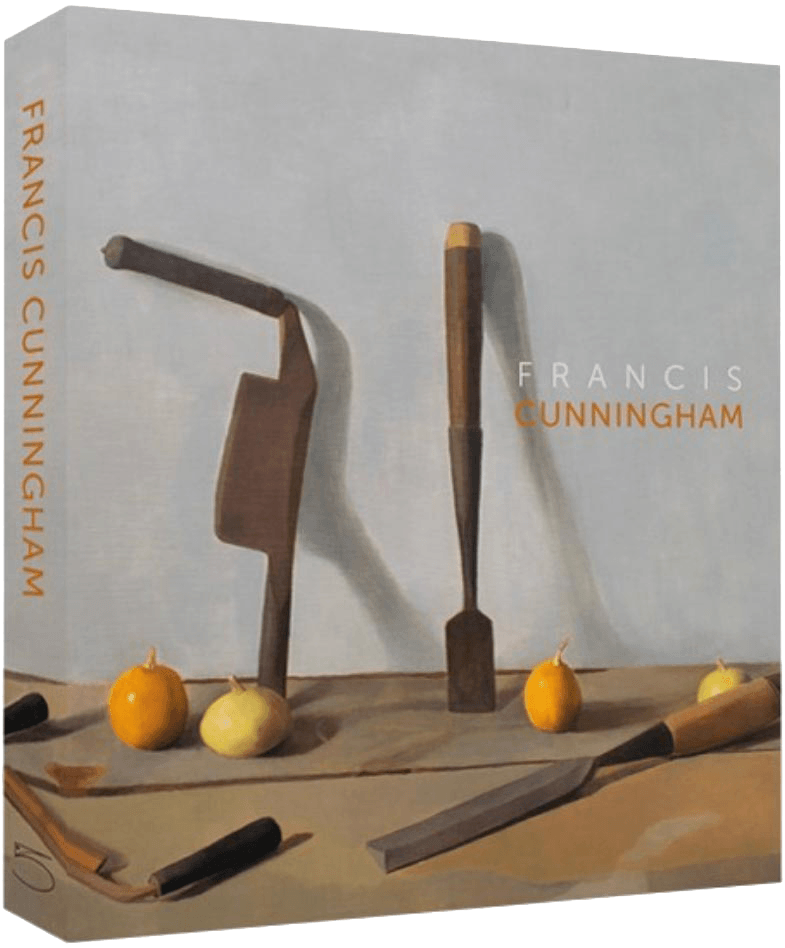
Unframing
A PAINTER’S MEMOIR AND PHILOSOPHY
Cunningham is rare among painters because he is also a writer. His memoir, Unframing: A Painter’s Memoir and Philosophy—published here online for the first time—is driven by a deep, passionate curiosity to better understand human nature within the context of the natural world. He grew up in New England, spent his career in New York City, and traveled the world. Cunningham is comfortable on American soil, spending hours alone at his easel, watching light transform the day, the color, and the spirit of everything around him until his canvases catch the eye, reminding us that real beauty is still to be found—and showing us exactly how and why. Steeped in classic literature and art, from the ancient Greeks onward, his memoir reveals the ineffable struggle between intuition and practice, body and soul, conviction and doubt that a meaningful life will assert, regardless of profession. As one early reader noted, "Cunningham's writing is evocative in a way that only an accomplished painter could achieve."
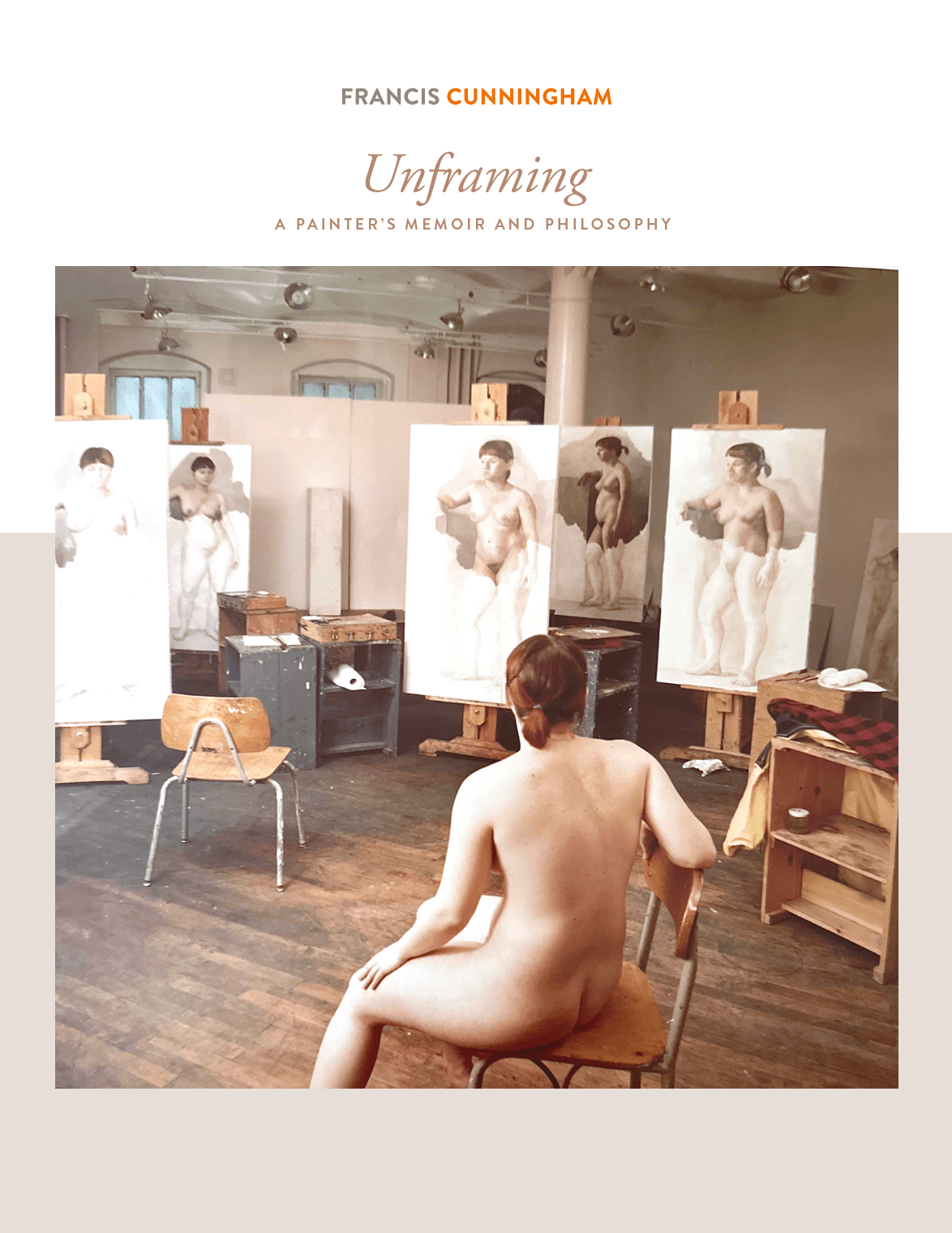
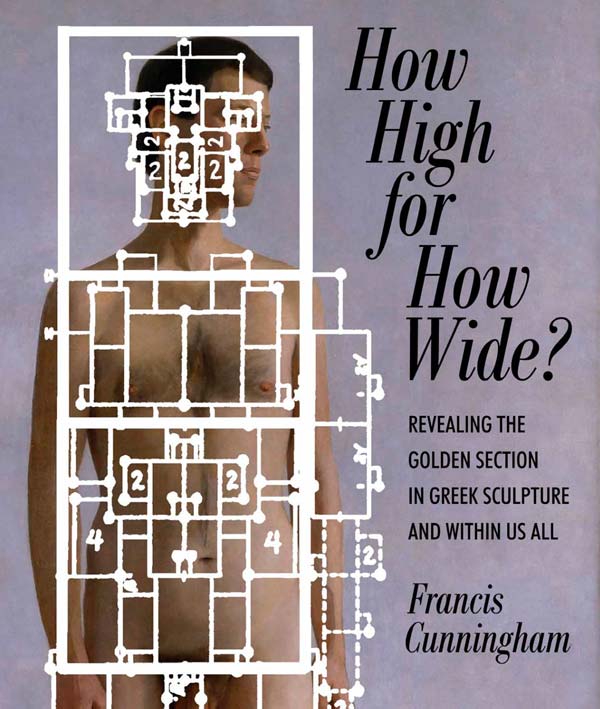
HOW HIGH FOR HIGH WIDE
Revealing the Golden Section in Greek Sculpture and the Harmonics Within Us
In this illustrated essay, Francis Cunningham contends that the forces of Greek proportion and geometry are just as alive in the human body today as they were in ancient Greece—but that in the age of abstraction, we have become blind to their powerful presence. Cunningham removes these blinders. Working with mathematical proportional relationships expressed through Golden Section rectangles, he introduces a revolutionary formula that frees the viewer from the fixed station point of the Italian Renaissance. This formula advances a possibility initiated by the Hellenistic Greeks for artists to paint contemporary nudes that are unidealized and uniquely "alive." These figures exist as containers of metaphor—gesturally harmonic, inherently well-proportioned, and as real as any one of us. By demonstrating that the contemporary is classic and the classic is contemporary, Cunningham’s formula offers definitive proof that unlocks enduring truth.
• Read the memoir HERE
• Read the memoir HERE
FRANCIS CUNNINGHAM
the monograph
This is the first monograph devoted to American painter Francis Cunningham, who is renowned for his work across the genres of landscape, still life, clothed portraiture, and nude figures. The book features over 180 reproductions of his paintings and drawings spanning eight decades and was published in 2019 by the prestigious Milan-based publishing house, 5 Continents Editions.
The volume opens with essays by distinguished art historians and critics, including Christopher Knight, recipient of the 2020 Pulitzer Prize for criticism, and John Walsh, the revered American art historian and director emeritus of the J. Paul Getty Museum, followed by a spirited interview with the artist, to reveal Cunningham's singular way of being, seeing, and creating.
Cunningham's work has been exhibited internationally in galleries and museums and is held in numerous public and private collections. Born in 1931, he currently maintains a studio in New York City, where he previously studied drawing and painting at the Art Students League from 1955 to 1959 under Edwin Dickinson, and anatomy with Robert Beverly Hale. Although his contemporaries at the League included Robert Rauschenberg, Cy Twombly, and Robert Smithson, Cunningham swam against the tide of Abstract Expressionism, Pop Art, and Minimalism—choosing instead to pursue figurative painting and drawing while vigorously advancing their contemporary methods.